Why We Mill Our Own Flour on Fridays
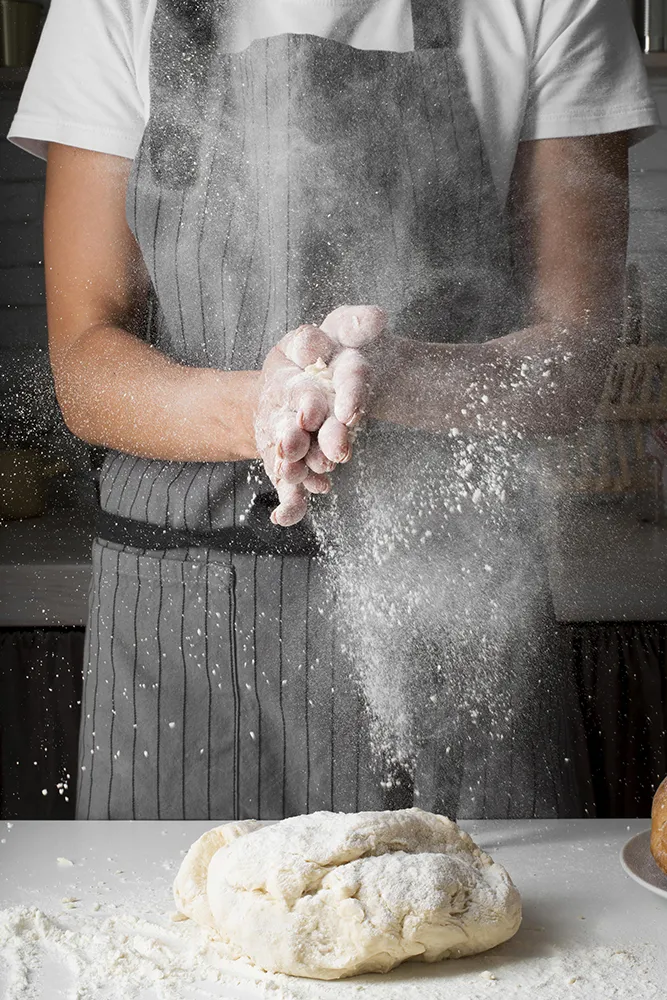
Every Friday morning, before the ovens are even fully hot, one of us wheels the stone mill out from the back corner and starts feeding it whole grain. It is slow. It is loud. It leaves a fine dust over everything within about six feet, including whoever is running it. We have been asked more than once why we bother, when a sack of good white flour from a proper mill would save us the best part of an hour every week. The honest answer is that Friday flour is a different ingredient, not just a fresher version of the same one.
Wheat berries hold their oils, their bran and their germ intact until the moment they are crushed. Once milled, that oil starts to oxidise almost immediately — within days, not months, the flavour begins to flatten and the nutrition begins to drop. Commercial flour is milled, bagged, shipped and stored for weeks or months before it reaches anybody's oven. Ours is milled on a Friday and mostly used within seven days. You can taste the difference in the crust before you even get to the crumb — there is a nuttiness to it that pre-milled flour, however good, has usually lost by the time it arrives.
The mill itself is a small stone-burr machine, not much bigger than a washing machine, and it is fussy. It needs cleaning out between grain types or the flavours bleed into each other. It grinds slower than we would like, which means Friday's bake plan is built around the mill's pace rather than ours. We have learned to let it set the schedule rather than fight it — pushing it faster produces heat, and heat is exactly what damages the oils we are trying to preserve in the first place.
We do not mill everything. Our lighter white loaves still use flour from Marriages, stoneground to a fine white at their mill in Essex, because that consistency matters for certain doughs and we are not precious about admitting it. What we mill ourselves goes into the heritage and wholemeal lines — the loaves where the character of the grain is meant to be the whole point. If you buy one of those on a Saturday, you are eating flour that was still a whole berry of wheat less than forty-eight hours earlier.
It costs us time we could spend elsewhere, and it costs us a certain amount of flour lost to an imperfect grind that has to be run through twice. We keep doing it because the alternative — buying it all in, pre-milled and stable on a shelf for months — would be easier and would also mean giving up the one thing that makes Friday's loaves taste like they do. That trade has never seemed close.